Table of Contents
Twin Block – a bimaxillary functional appliance
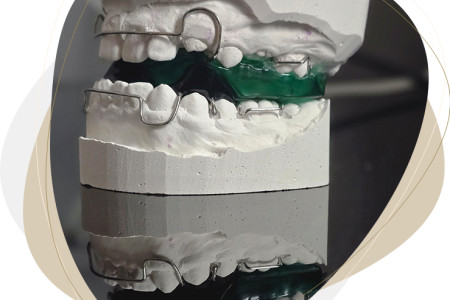
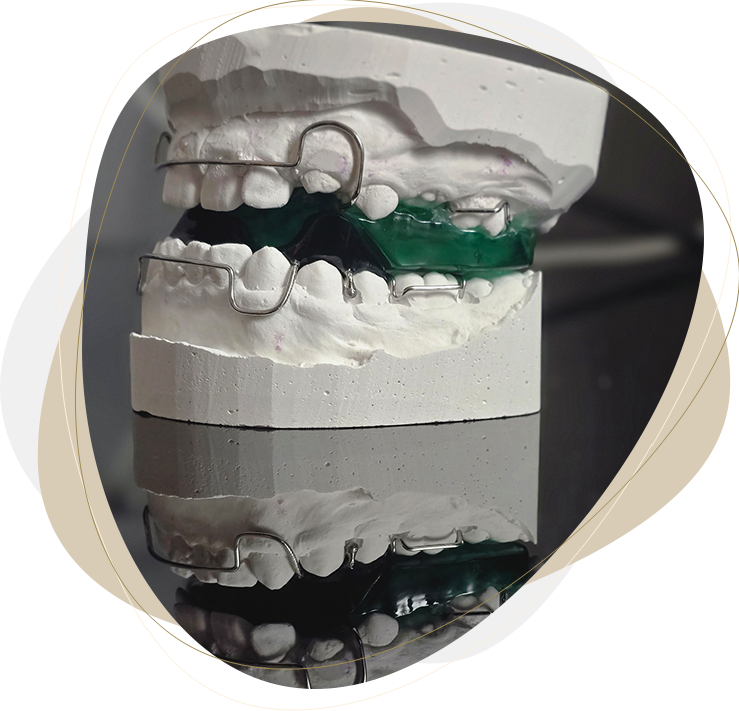
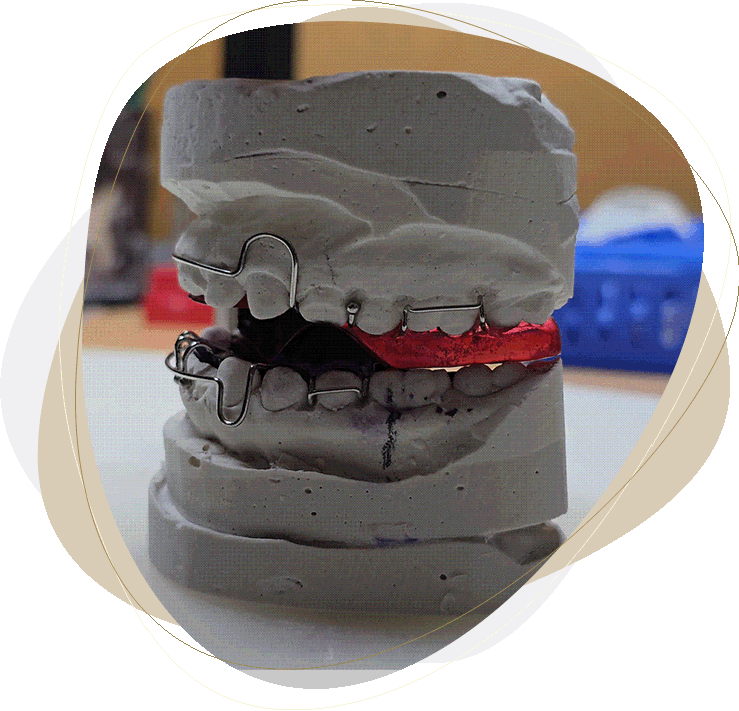
The Twin Block is a removable bimaxillary functional appliance consisting of two separate components: an upper and a lower plate. Its characteristic features are the interacting inclined bite blocks, which position the mandible according to the relationship determined by the clinician when the dental arches close. The appliance is primarily used in the management of Class II malocclusions in growing patients.
At KarDent, Twin Block appliances are manufactured individually from working models, impressions or intraoral scans. The design, bite-block configuration, method of retention and additional components are determined by the clinician’s prescription.
Two interacting removable plates
The appliance consists of separate upper and lower components that can be inserted and removed independently. During closure, the inclined surfaces of the two plates engage with each other and guide the mandible into the prescribed position. This two-part construction distinguishes the Twin Block from single-piece functional appliances.
Depending on the prescribed design, the appliance may incorporate:
- upper and lower acrylic baseplates,
- inclined bite blocks,
- an expansion screw in the upper plate,
- a labial bow,
- Adams clasps,
- ball-ended clasps or other retentive components,
- occlusal rests,
- springs and additional active components,
- individual acrylic modifications.
The exact configuration must correspond to the construction specified in the prescription. Twin Block variants described in the literature may differ in terms of expansion screws, labial bows and clasp arrangements.
Inclined bite blocks and construction bite
The inclined bite blocks form the principal functional connection between the upper and lower components. Their relationship reproduces the maxillomandibular position registered by the clinician using a construction bite.
During fabrication, we check:
- the bilateral symmetry of the blocks,
- the configuration and inclination of the contact surfaces,
- the height of the acrylic components,
- stable contact between the two plates,
- consistency with the submitted mandibular position,
- the finishing of the acrylic margins and surfaces.
An accurate construction bite is required for the laboratory to reproduce the prescribed relationship between the dental arches. Construction-bite records are used to determine the position incorporated into Twin Block appliances.
Upper Twin Block component
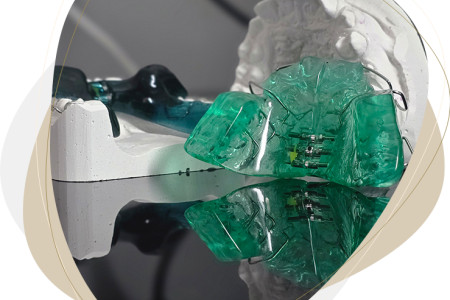
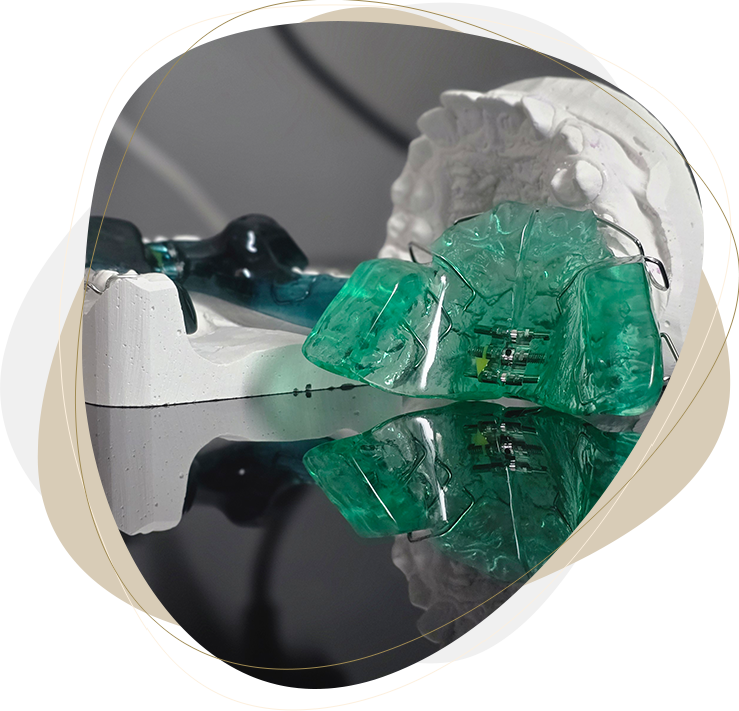
The upper plate may include an acrylic baseplate with inclined bite blocks, retentive components and, depending on the design, an expansion screw.
The prescription may specify:
- the screw type and position,
- the configuration of the acrylic cut,
- the presence or absence of a labial bow,
- the type and position of the clasps,
- the extent of the bite blocks,
- additional springs or active components.
An expansion screw is not a mandatory component of every Twin Block appliance. It is included only when required by the clinician’s design.
Lower Twin Block component
The lower plate incorporates an acrylic section that interacts with the upper bite blocks and components providing retention on the mandibular dental arch.
The construction may include Adams clasps, ball-ended clasps, a labial bow, occlusal rests or other elements specified in the prescription. The arrangement of the wire components should accommodate the bite blocks and permit the appliance to be inserted and removed correctly.
Published Twin Block designs have used Adams clasps on posterior teeth together with additional retentive components.
Available design modifications
Twin Block appliances may be manufactured in numerous variants, so the prescription should clearly define the required construction. Possible modifications include:
- a transverse expansion screw,
- additional sector screws,
- an upper or lower labial bow,
- springs acting on selected teeth,
- alternative clasp arrangements,
- additional occlusal rests,
- modified bite-block coverage,
- acrylic coverage of selected teeth,
- other elements required by the clinician’s design.
No single design should be presented as universal. Each Twin Block is manufactured according to the individual prescription and the submitted construction bite.
Manufacture based on models or scans
The Twin Block appliance may be manufactured from accurate working models, impressions or intraoral scans. In a digital workflow, working models are produced using 3D printing technology.
The prescription should include:
- complete records of the upper and lower arches,
- an accurate construction bite,
- information regarding mandibular advancement and vertical opening,
- the screw type and acrylic cut, where required,
- the prescribed clasp and bow configuration,
- the extent and design of the bite blocks,
- details of any additional components or modifications.
Patient selection, construction-bite registration, appliance design, activation and instructions for use remain the responsibility of the treating clinician. KarDent is responsible for technical fabrication in accordance with the submitted documentation.