Table of Contents
Fixed retainer with a silicone transfer jig
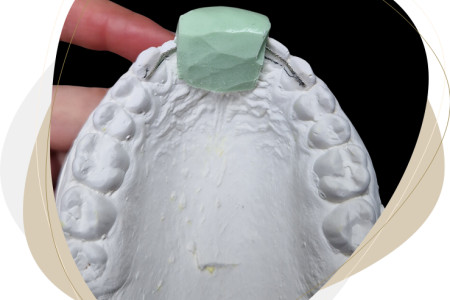
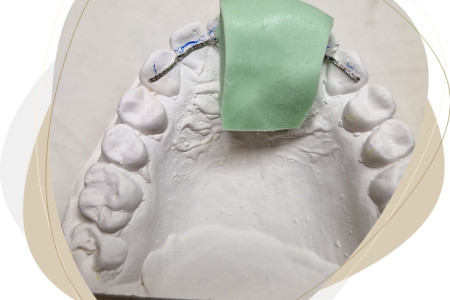
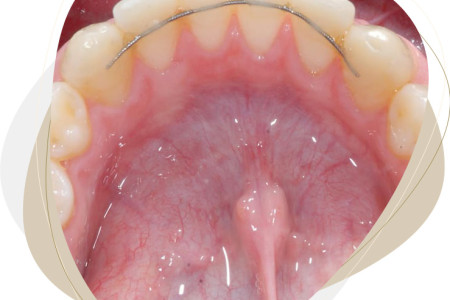
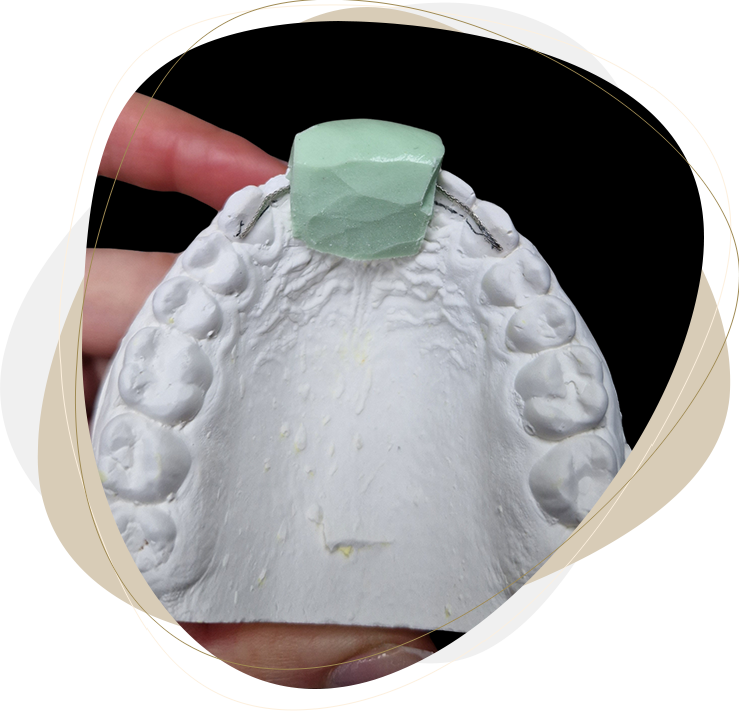
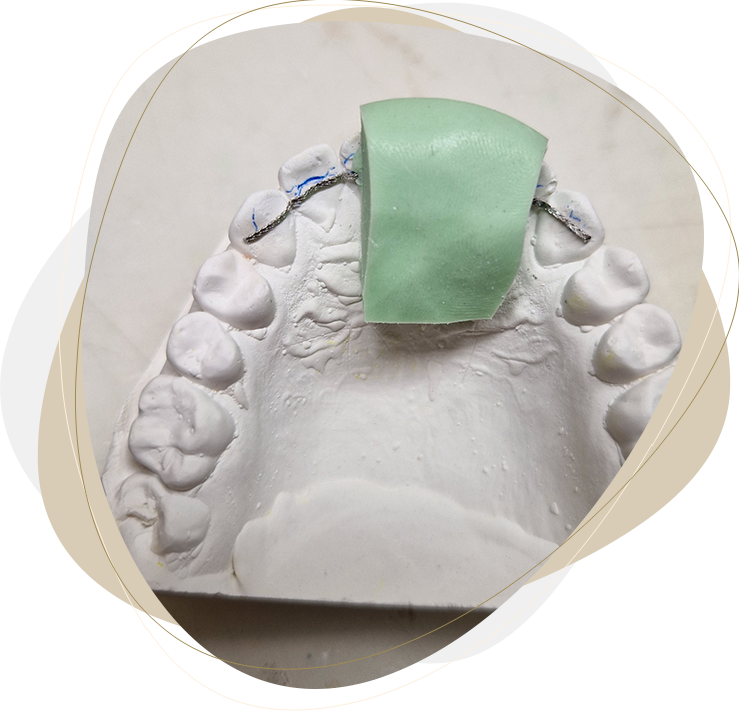
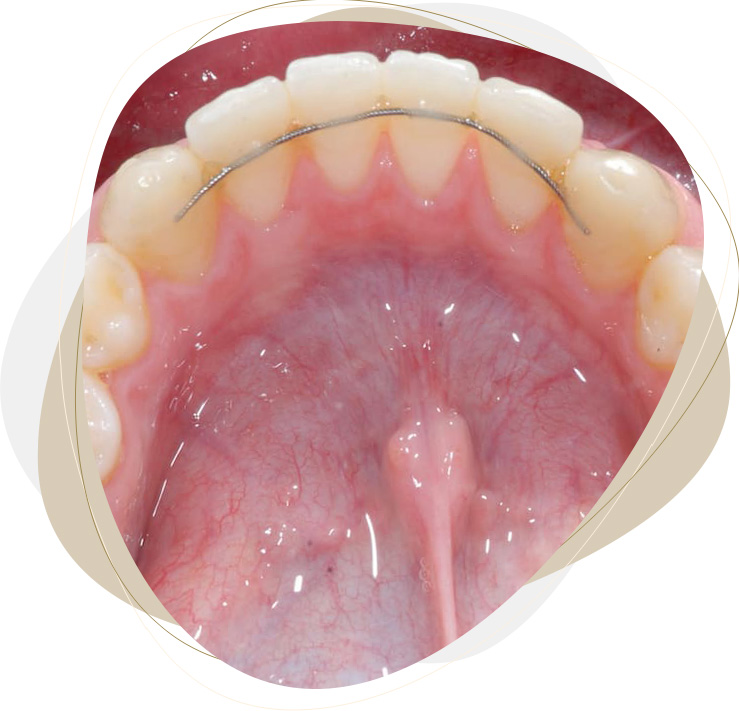
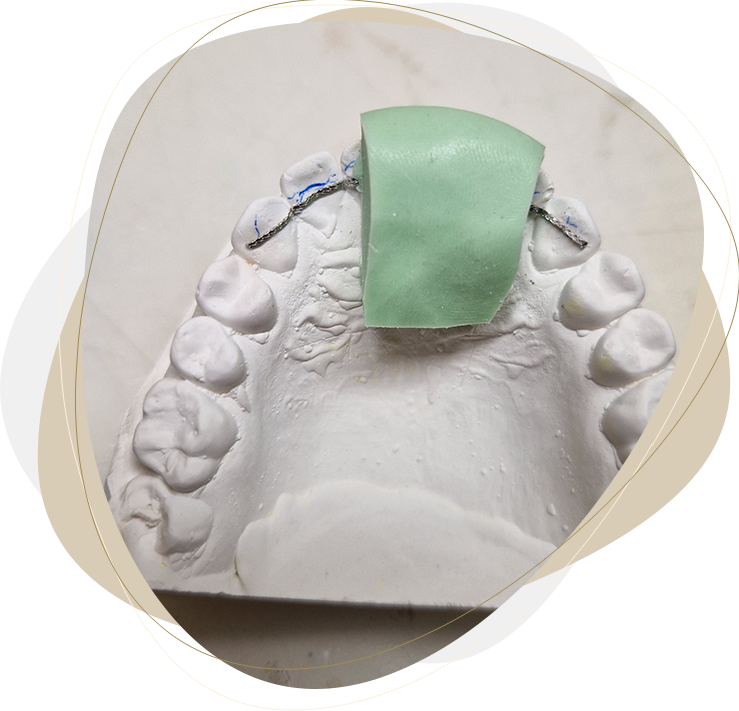
A fixed retainer is a custom-made retention component designed for bonding to the lingual or palatal surfaces of the teeth. At KarDent, each retainer is prepared from individually contoured multistranded wire and supplied with a silicone transfer jig.
The wire is shaped on the working model according to the extent specified by the clinician. The jig maintains its planned position during transfer to the mouth and supports controlled placement before the bonding composite is cured. Silicone transfer trays and keys are established methods for the indirect positioning of fixed orthodontic retainers.
Individually contoured multistranded wire
The retainer is manufactured from multistranded orthodontic wire individually adapted to the tooth surfaces reproduced on the working model. During fabrication, we check the wire configuration, adaptation and passive fit.
Multistranded stainless-steel wires are widely used for bonded fixed orthodontic retention and may be bonded with composite to the individual teeth included in the prescribed retention segment.
Individual silicone transfer jig
The silicone transfer jig is prepared specifically for the corresponding retainer. It stabilises the wire and maintains the position established on the working model while the construction is transferred to the mouth.
The transfer jig is an auxiliary component supplied with the retainer. It is not a separate orthodontic appliance and is removed after the wire has been bonded by the clinician.
Available retainer coverage
The retainer may be manufactured for the upper or lower arch and with the extent specified in the prescription. Common options include:
- canine to canine – 3–3,
- first premolar to first premolar – 4–4,
- another individually specified retention segment.
The clinician should clearly indicate the teeth to be included and the required wire configuration.
Manufacture based on models or scans
The retainer may be manufactured from a physical model supplied to the laboratory, an impression or an intraoral scan. In a digital workflow, the working model is produced using 3D printing technology.